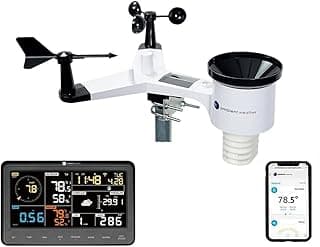
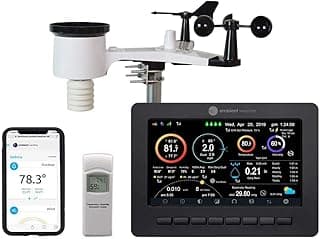
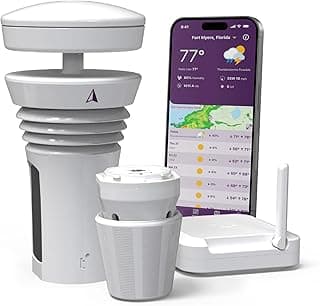
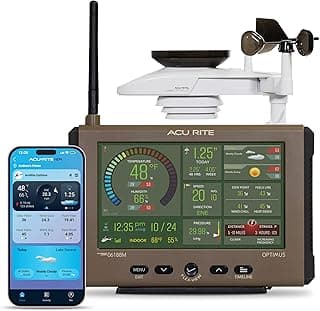
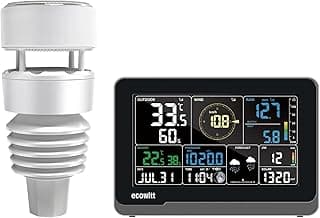
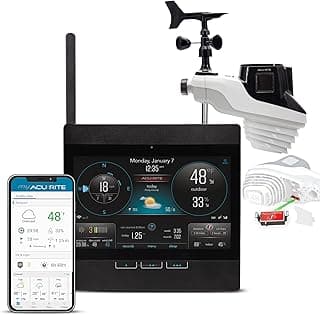
Buying Guide: How to Choose the Best WiFi Weather Station
Many people shopping for a WiFi weather station wonder if they'll get reliable data without constant tinkering or high costs. The good news is that with a few key considerations, you can find a model that fits your needs—whether for home monitoring, gardening, or just staying informed about local conditions—without overcomplicating setup or maintenance.
WiFi Connectivity and App Integration
WiFi capability lets you access weather data remotely via a smartphone app, which is handy for checking conditions from anywhere. Look for stations with strong 2.4GHz WiFi support, as most handle this band reliably without dropouts.
- If you have a large property, prioritize models with good signal range or extenders.
- Avoid units that require frequent reconnection; test app stability during setup.
For most users, seamless app syncing means real-time alerts without needing to check the base unit.
Sensor Accuracy and Types
Accurate sensors are crucial for trustworthy readings on temperature, humidity, wind, rain, and UV. In real use, even small errors can mislead decisions like when to water plants or protect outdoor gear.
- Choose stations with calibrated sensors for ±0.5°F temperature accuracy and ±3% humidity precision.
- If tracking wind or rain matters, opt for models with anemometers and tipping-bucket rain gauges.
If you're in a variable climate, then prioritize multi-sensor arrays over basic temp-humidity units.
Range and Outdoor Sensor Placement
The distance between indoor display and outdoor sensors affects data reliability. Most stations cover 300–1000 feet in open air, but walls and interference reduce this.
- For backyards or farms, select longer-range options or add repeaters if needed.
- Avoid cheap models with under 200 feet effective range in real-world obstacles.
Generally, test placement during the return window to ensure consistent signal.
Power Options and Reliability
Power source impacts uptime, especially during outages or remote setups. Solar-powered sensors with battery backups keep data flowing without daily intervention.
- If in a sunny area, go for solar models to minimize battery swaps.
- For shaded spots, ensure rechargeable batteries last 1–2 years.
In most cases, hybrid power reduces maintenance compared to fully battery-dependent units.
Weatherproofing and Durability
Outdoor units face rain, wind, and temperature swings, so IPX-rated enclosures (like IPX5 or higher) prevent failures. Poor build quality leads to foggy displays or rusted sensors over time.
- Look for UV-resistant plastics and sealed ports.
- If in harsh weather, then choose stations rated for -20°F to 140°F extremes.
This ensures years of use without frequent replacements.
Display and Data Features
A clear indoor display plus app graphs help track trends like daily highs or storm patterns. Extra features like forecasting or soil moisture add value for specific hobbies.
- For casual users, a simple LCD with backlighting suffices.
- Gardeners or farmers benefit from customizable alerts and historical data storage.
Match features to your needs to avoid paying for unused extras.
Setup Ease and Ongoing Costs
Installation typically takes 15–30 minutes, with app-guided pairing easing WiFi setup—no tech expertise required. Ongoing costs are low, mainly occasional batteries.
- If you're not handy, pick plug-and-play models over wired ones.
- Budget $150–$400 for reliable options; cheaper units often skimp on accuracy.
For most homeowners, this setup delivers value without hidden fees or complexity.
Frequently Asked Questions About the Best WiFi Weather Stations
What is the typical cost of a good WiFi weather station?
Expect to pay between $150 and $400 for a reliable WiFi weather station that offers accurate readings and app connectivity. If you're on a budget, entry-level models around $150 provide solid basics like temperature and humidity tracking, while premium ones justify higher prices with advanced sensors for wind, rain, and UV. Factor in any subscription fees for cloud data storage, which are usually under $50 per year.
Are WiFi weather stations safe to use around my home?
Most WiFi weather stations are designed with safety in mind, featuring weatherproof enclosures rated IPX5 or higher to withstand rain and wind without electrical risks. They use low-voltage power sources like solar panels or adapters that meet standard safety certifications, minimizing fire hazards. In most cases, mounting them away from power lines and following the manual's guidelines keeps everything secure for family use.
How easy is installation for a WiFi-enabled weather station?
Installation typically takes 20-45 minutes with basic tools like a drill and screwdriver; you'll mount the outdoor sensor suite on a pole or roof edge, then connect the indoor display or hub to your WiFi. The app guides you through pairing, and in most cases, no professional help is needed unless you're installing on a steep roof. Test the signal strength first to ensure reliable data transmission up to 300 feet away.
How efficient are WiFi weather stations at delivering real-time data?
Top WiFi weather stations update data every 16-60 seconds via your home network, providing hyperlocal forecasts that beat public apps for backyard accuracy. Battery life on solar-powered models lasts years with minimal maintenance, and efficiency shines in remote monitoring through phone alerts for storms or frost. If your WiFi signal is strong, you'll get seamless efficiency without lag or data loss.
How do WiFi weather stations compare to traditional non-connected models?
WiFi models excel over traditional ones by syncing data to your phone for anytime access and historical charts, while basic stations limit you to on-site displays. They're pricier upfront but more efficient long-term with no need for manual logging, plus extras like soil moisture sensors for gardening. Choose WiFi if you want integrations with smart home systems; otherwise, traditional suits simple local viewing.
Conclusion
Choosing the best wifi weather station comes down to reliable connectivity, accurate sensors, and user-friendly apps that deliver real-time data effortlessly. Prioritize models with strong signal range, comprehensive weather metrics, and seamless integration for your setup.
With these key factors in mind, you're well-equipped to make a confident decision tailored to your needs. Take a moment to match features with your lifestyle, and enjoy precise, accessible weather insights right from your device.