Buying Guide: Finding the Right Stack Cutter for Your Needs
Choosing among stack cutters can feel overwhelming when you're dealing with stacks of paper, cardstock, or other materials for office tasks, crafting, or small print runs. Many buyers worry about getting enough cutting power without compromising safety or ease of use. This guide breaks down the key factors to consider, helping you match a cutter to your specific workflow.
Cutting Capacity and Stack Height
The maximum stack height a cutter handles determines how much material you can process at once, saving time on repetitive jobs. For light home use, like trimming flyers, a capacity of 50–100 sheets often suffices. In busier settings, aim for 200–500 sheets or more to avoid frequent reloading.
- If your projects involve thin paper under 80gsm, prioritize precision over sheer volume.
- For thicker stacks or cardstock, check the cutter's tested capacity to ensure clean edges without jamming.
Blade Type and Cutting Mechanism
Blades vary between guillotine-style for straight precision cuts and rotary for smoother shearing on smaller stacks. Guillotine blades excel in high-volume, straight-line tasks, while rotary options reduce fraying on photos or delicate media.
Opt for replaceable blades if you cut frequently, as they maintain sharpness longer than fixed ones. Avoid models with dull factory blades by verifying user-tested edge retention.
- Choose guillotine if... you need speed on large stacks.
- Select rotary if... accuracy on curves or photos matters more.
Safety Features
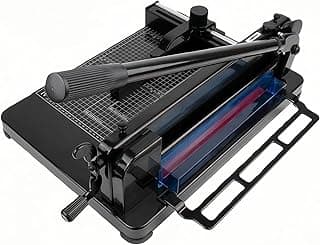
Safety mechanisms like blade guards, magnetic stops, and two-hand operation prevent accidents during repeated use. Clear acrylic shields let you monitor cuts without exposure, which is especially useful in shared workspaces.
For most users, models with automatic blade lock-downs provide peace of mind. Test the guard's sturdiness in descriptions—flimsy ones can shift and reduce effectiveness.
- Skip cutters lacking visible safety locks if children or novices will use it.
- Prioritize transparent shields if... visibility during alignment is key.
Build Quality and Durability
A sturdy metal base and reinforced rails ensure the cutter stays stable under load, preventing wobbles that lead to uneven cuts. Plastic-heavy builds may warp over time with heavy use.
Look for solid clamping systems that secure stacks evenly. In most cases, heavier units (over 20 pounds) offer better longevity for frequent operation.
- Choose metal-framed if... daily use is expected.
- Lightweight plastic works if... portability trumps endurance.
Size, Portability, and Workspace Fit
Consider the cutter's footprint alongside your table space. Compact models under 20 inches wide suit desks, while larger ones fit dedicated craft rooms.
Portable designs with handles make storage easy, but verify weight if moving often. Measure your area first to avoid oversized units that dominate small spaces.
- Go compact if... desk space is limited.
- Larger sizes suit if... you have a fixed workstation.
Accuracy and Measuring Systems
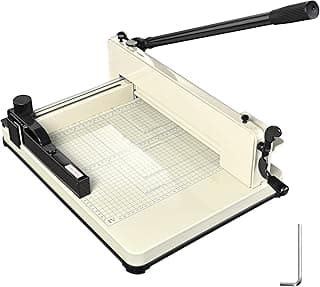
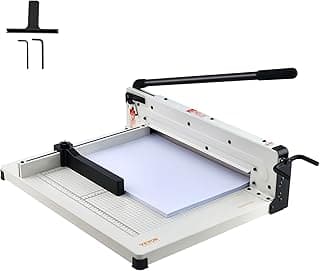
Precise rulers, adjustable back gauges, and side guides ensure repeatable cuts, crucial for matching multiples like business cards. Magnetic or sliding gauges adjust faster than fixed ones.
Check for both metric and imperial scales if your projects mix units. In practice, visible markings reduce measuring errors by up to 50%.
- Seek expandable guides if... varying paper sizes are common.
- Basic scales suffice if... cuts are mostly standard formats.
Maintenance and Long-Term Costs
Easy blade swaps and minimal lubrication needs keep downtime low. Models with accessible parts avoid costly repairs down the line.
Factor in blade replacement costs—sharpenable ones lower expenses for high-volume users. Generally, cutters with simple upkeep prove more economical over years of use.
- Plan for sharpenings if... budget is tight long-term.
- Disposable blades fit if... convenience outweighs repeat costs.
Best Stack Cutters FAQ
What should I consider when choosing the best stack cutter for my needs?
Focus on your cutting volume and material thickness first—if you're handling reams of paper or cardstock daily, prioritize models with higher capacity and sharp, replaceable blades for consistent results. Efficiency matters too; look for smooth gliding mechanisms that reduce effort and jamming. In most cases, a cutter under $200 offers great value for home or small office use without sacrificing durability.
Are stack cutters safe to use, especially for beginners?
Modern stack cutters come with safety guards and locking mechanisms that prevent accidental blade exposure, making them safer than older guillotine styles. Always use the alignment guides and keep hands clear of the cutting area, and if you're new to them, opt for models with ergonomic handles for better control. These features minimize risks, but proper setup and slow, deliberate cuts are key to avoiding mishaps.
How much does a good stack cutter cost, and is it worth the investment?
Expect to pay $50–$150 for reliable entry-level options that handle everyday stacking tasks, while heavy-duty versions for professional use run $200–$500. The cost pays off if you cut frequently, as they save time compared to scissors or single-sheet trimmers and last years with minimal maintenance. For occasional users, a mid-range model balances price and performance without overkill.
What's the best way to install and set up a stack cutter?
Most stack cutters require no complex installation—just place it on a flat, stable surface like a desk or workbench, and secure it with included clamps if provided for vibration-free operation. Adjust the side guides to match your paper size and test with scrap sheets to ensure even cuts. If your model has a fold-out arm, extend it fully during setup to maximize stability.
How do stack cutters compare to other paper cutting tools in efficiency?
Stack cutters excel for bulk jobs, slicing through 100–500 sheets at once far faster than rotary trimmers or scissors, which struggle with stacks. They're less precise for intricate designs compared to craft knives but unbeatable for straight, clean edges on flyers or business cards. Choose one if efficiency on volume is your goal; otherwise, lighter tools suffice for small tasks.
Conclusion
Choosing the best stack cutters comes down to blade quality, capacity, safety features, and ease of use. We've highlighted options that balance precision cutting with durability for both hobbyists and professionals.
With the right model, you'll handle stacks efficiently and safely, boosting your productivity without hassle. Take a moment to match your needs—volume, material type, and budget—to the top performers discussed. Your ideal cutter is here; select confidently and get started today.