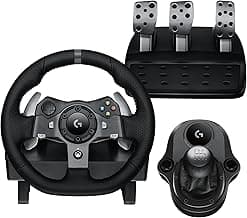
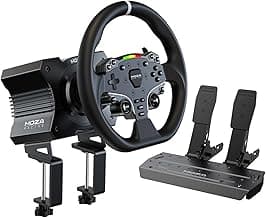
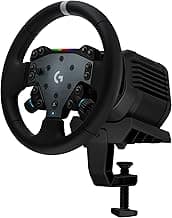
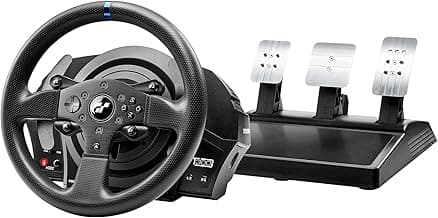
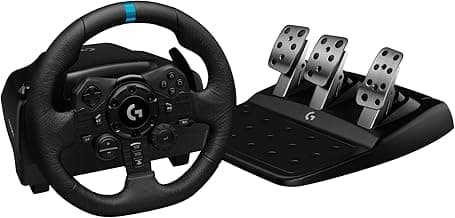
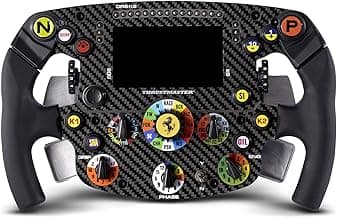
Buying Guide: Finding the Right Sim Racing Wheel for You
Choosing among the best sim racing wheels can feel overwhelming with so many options promising immersive experiences. Many buyers worry about compatibility, setup complexity, or whether the investment matches their gaming habits. This guide breaks down the key factors to help you focus on what really matters for your setup.
Wheel Base Power and Torque
The wheel base delivers force feedback, simulating real car handling like understeer or road texture. In real use, stronger torque makes sessions more engaging but requires a sturdy mount.
- If you race casually on a desk, 5-8 Nm often suffices for responsive feel without overwhelming your space.
- For serious sim racing with longer sessions, aim for 10 Nm or higher to capture nuanced details, but check your rig's stability first.
Avoid bases under 5 Nm if immersion is key, as they may feel vague during aggressive maneuvers.
Steering Wheel Diameter and Grip
Wheel size affects control precision; smaller diameters suit quick GT steering, while larger ones mimic open-wheel racing. Grip material impacts comfort during extended play.
- Go for 280-300mm diameters for most users—they balance agility and realism without cramping your desk setup.
- Choose leather or microfiber grips if sweaty hands are an issue; suede works well in cooler rooms for better hold.
Test for rim thickness too—thinner rims reduce fatigue if you prefer formula-style racing.
Pedal Set Quality and Adjustability
Pedals handle braking and throttle inputs, where load cell tech provides progressive resistance like a real brake pedal. Poor pedals lead to inconsistent lap times.
- For beginners, basic hall-effect pedals are reliable and affordable.
- If precision braking matters, select load cell pedals with at least 50-100kg pressure for authentic modulation.
Adjustable pedal plates help match your seating position, reducing leg strain over time.
Compatibility and Platform Support
Not all wheels work seamlessly across systems, leading to frustrating driver issues or limited features. Verify support before buying to avoid returns.
- PC users have the widest options, but console gamers should confirm native compatibility for full force feedback.
- Check for firmware updates—regular ones fix bugs and add features.
If you switch platforms often, prioritize wheels with broad ecosystem support.
Build Quality and Durability
Sim racing involves intense twisting, so metal internals outlast plastic in heavy use. Look for quick-release systems for easy wheel swaps.
- Metal gearsets and shifters endure thousands of hours without slop.
- QR hubs simplify customization if you want multiple wheels.
For desk mounts, ensure the base has rubber feet to prevent slipping during hard lock turns.
Mounting and Space Requirements
Proper mounting prevents wobbling, which ruins feedback. Many setups fit desks, but wheelbases need clamping space.
- Desk clamps work for most casual users; add a plate for 4-hole rigs if building a cockpit.
- Measure your area—a 30cm depth base fits tight spaces.
Start simple to test commitment before investing in a full frame.
Budget and Value Balance
Prices range widely, but value comes from features matching your play frequency. Entry-level kits start around $200-400, mid-range at $500-800.
- If racing 1-2 hours weekly, mid-tier options deliver solid feedback without excess cost.
- For daily use, higher-end torque pays off long-term through better immersion and resale value.
Factor in extras like shifters—add them later if budget-tight to spread costs.
Frequently Asked Questions About Sim Racing Wheels
What are the best sim racing wheels for beginners on a budget?
If you're just starting out, look for entry-level sim racing wheels under $300 that offer solid force feedback without unnecessary extras. These models typically provide enough realism for casual racing games on PC or consoles, helping you build skills without a huge upfront cost. In most cases, they connect easily via USB and come with adjustable pedals, making them a practical choice if value matters more than pro-level precision.
How much does a good sim racing wheel setup really cost?
A reliable sim racing wheel starts around $200-$400 for basic kits with pedals, while mid-range options with stronger force feedback climb to $500-$800. Factor in extras like a sturdy wheel stand or shifter, which can add $100-$300 depending on your setup needs. Most users find that spending in the $400-$600 range strikes the best balance between performance and affordability for immersive home racing.
Are sim racing wheels safe to use at home?
Sim racing wheels are designed with safety in mind, featuring secure clamp mounts that grip desks or tables firmly during intense sessions. If you mount it properly and avoid loose setups, the risk of slippage is minimal, even with heavy force feedback. Always check weight limits on your furniture and consider a dedicated rig if you race for hours to prevent fatigue-related issues.
How easy is it to install a sim racing wheel?
Installation usually takes 10-20 minutes: clamp the base to your desk, plug in the USB for power and connection, and pair the pedals. Most modern wheels are plug-and-play on PC and popular consoles, with drivers auto-downloading or included on a disc. If you run into calibration hiccups, a quick restart or game-specific settings tweak resolves it in most cases.
What should I compare when choosing between different sim racing wheels?
Focus on force feedback strength, rotation angle (ideally 900 degrees for realism), and pedal quality when comparing options. Entry-level wheels suit casual gamers, while direct drive models excel for serious sim racers seeking precise road feel. Consider your play platform compatibility and whether you need expandable features like handbrakes to match your racing style and budget.
Conclusion
Choosing the best sim racing wheels comes down to balancing force feedback quality, build durability, and compatibility with your setup. Key factors like wheel rotation, pedal precision, and ecosystem integration make all the difference in delivering an immersive racing experience.
With the right priorities in mind, you're well-equipped to make a confident decision that matches your budget and skill level. Take a moment to match these essentials to your needs, and elevate your sim racing game today.