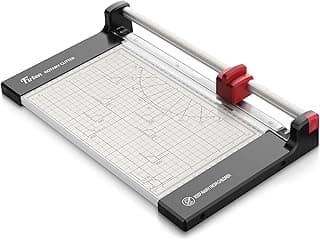
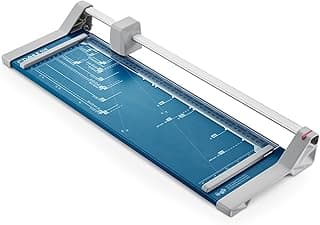
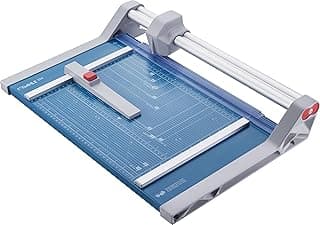
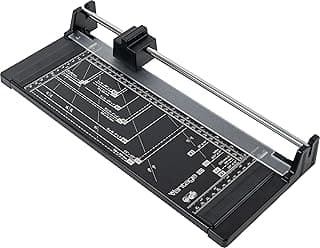
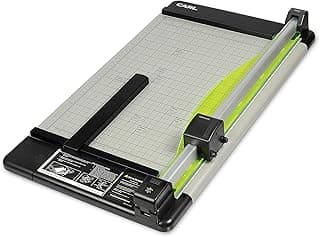
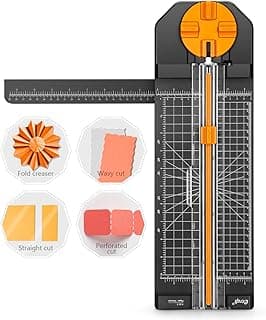
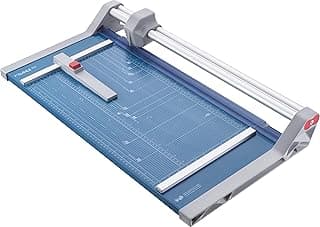
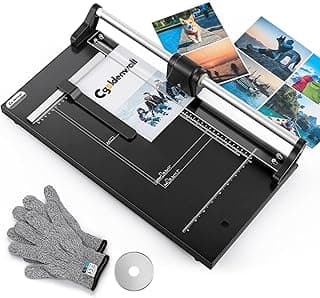
Buying Guide: Best Rotary Trimmers for Cardstock
Many crafters and designers searching for the best rotary trimmers for cardstock worry about clean cuts on thicker materials without fraying edges or dulling the blade too quickly. The good news is that focusing on a few key factors helps match the right trimmer to your projects, avoiding common frustrations like jagged lines or frequent replacements.
Cutting Capacity and Material Thickness
The ability to handle cardstock thickness determines smooth, precise cuts in real use. Most cardstock ranges from 65lb to 110lb, so check if the trimmer supports at least 0.5mm up to 1.5mm stack height.
- If you work with heavier cardstock often, opt for models rated for 1mm+ to prevent tearing.
- For lighter sheets or occasional use, 0.5mm capacity works fine and keeps the tool compact.
Avoid trimmers limited to paper only, as they struggle with cardstock's density, leading to uneven results.
Blade Quality and Durability
A sharp, high-quality rotary blade is crucial for cardstock because it glides through dense fibers without dragging. Tungsten steel blades hold edges longer under repeated use.
- Look for circular blades with 45-60 teeth for cleaner cuts on thicker stock.
- Replaceable blades extend usability; plan for swaps every 500-1000 cuts on cardstock.
If your projects involve frequent trimming, prioritize models with easy blade access to minimize downtime.
Cutting Length and Bed Size
Trimmers with longer cutting lengths suit larger cardstock sheets, preventing the need to reposition material mid-cut, which can cause misalignment.
- For standard 12-inch cardstock, a 12-15 inch cut length covers most needs.
- Choose 18-inch+ beds if handling A3 sizes or banners to maintain straight edges.
Compact beds are practical for small workspaces, but test if they fit your typical sheet sizes first.
Build Quality and Stability
A sturdy base and rail system prevent shifting during cuts, especially on heavyweight cardstock where pressure can cause wobbles.
- Metal rails and non-slip mats provide better grip than plastic for consistent performance.
- Self-healing mats protect the surface and maintain accuracy over time.
For frequent use, heavier builds (2-5 lbs) reduce movement, but lighter ones suit portability if you craft on the go.
Safety Features and Ease of Use
Safety matters when trimming stacks of cardstock, as exposed blades can lead to slips. Features like blade guards and locking mechanisms add peace of mind without complicating operation.
- If working with kids or in shared spaces, select covered blades that retract fully.
- Ergonomic handles reduce hand fatigue during long sessions.
Most models require no special setup—just unbox and use—keeping things simple and cost-effective.
Maintenance and Long-Term Costs
Low-maintenance trimmers save money over time, as cardstock dulls blades faster than paper. Factor in replacement part availability.
- Models with affordable blades ($10-20 each) keep ownership costs down.
- Clean the blade and mat after each session to extend life.
For hobbyists, basic upkeep suffices; professionals may prefer durable components for heavier workloads.
FAQ: Best Rotary Trimmers for Cardstock
What should I look for in the best rotary trimmers for cardstock?
Focus on trimmers with sharp, durable circular blades that handle thick cardstock without tearing or dragging. A sturdy cutting mat and adjustable paper guide are essential for straight, precise cuts up to 12 inches wide. In most cases, models with ergonomic handles reduce hand fatigue during extended crafting sessions.
Are rotary trimmers safe for cutting heavy cardstock at home?
Yes, most quality rotary trimmers feature safety locks and enclosed blades to prevent accidental cuts, making them safer than guillotine styles for home use. Always use the included cutting mat to protect surfaces and keep fingers clear of the blade path. If you're working with kids, opt for models with child-proof mechanisms for added peace of mind.
How much do good rotary trimmers for thick cardstock typically cost?
Expect to pay between $20 and $60 for reliable options that cut cardstock smoothly without dulling quickly. Cheaper models under $15 often struggle with thicker stocks and need frequent blade replacements, while pricier ones offer better build quality and longevity. Your budget should match your cutting volume—occasional users can save without sacrificing performance.
Do rotary trimmers require any special setup or installation?
No complex installation is needed; most rotary trimmers are ready to use right out of the box after unfolding the base and attaching the blade if separate. Check that the cutting mat aligns properly with the blade for accurate cuts, and test on scrap cardstock first. In rare cases, tightening a small screw secures the guide rail for stability.
How do rotary trimmers compare to other cutters for cardstock projects?
Rotary trimmers excel in clean, straight edges on cardstock compared to scissors, which can warp thick material, or craft knives that require more skill and mats. They're faster for repetitive straight cuts than guillotine trimmers, though less ideal for curves. If efficiency matters for bulk projects, rotary styles save time and reduce waste significantly.
Conclusion
Choosing the best rotary trimmers for cardstock comes down to blade quality, cutting length, and sturdy construction that handles thick materials without fraying edges. We've highlighted models excelling in precision and durability, ensuring clean cuts for your projects.
With these insights, you're equipped to make a confident decision tailored to your needs—whether for frequent use or occasional crafting. Consider your workspace and volume to select the ideal option, and elevate your cardstock work effortlessly today.