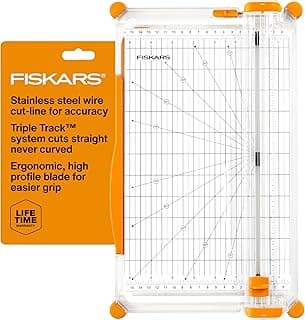
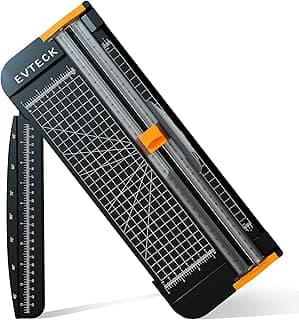
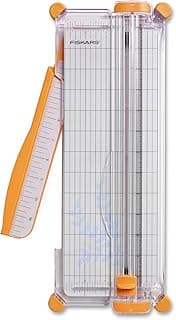
Buying Guide: Best Rotary Paper Trimmers for Scrapbooking
Choosing among rotary paper trimmers for scrapbooking often feels overwhelming when you're juggling different paper sizes, cut precision needs, and storage constraints. Many scrapbookers end up with tools that either dull quickly or struggle with thicker materials, leading to frustration during projects. This guide breaks down the key factors to focus on for a practical fit.
Cutting Length and Paper Capacity
The cutting length determines how much paper you can trim in one pass, which matters most for handling scrapbook pages or photos without multiple repositionings. For standard 12-inch layouts, a 12- to 15-inch blade length works well in most cases.
- If you frequently work with A4 or letter-size paper, opt for at least 12 inches to avoid awkward adjustments.
- For larger scrapbook spreads, consider 15 inches or more, but note these take up more desk space.
- Avoid trimmers under 10 inches unless your projects are consistently small, as they limit versatility.
Blade Quality and Material Thickness Handling
Rotary blades excel at clean, straight cuts on paper and cardstock, but their sharpness and replaceability affect long-term use. Thicker materials like 80- to 200-lb cardstock are common in scrapbooking, so check the trimmer's rated capacity to prevent tearing or jamming.
- Look for models with durable, replaceable blades—steel ones generally hold an edge longer for frequent use.
- If you cut photos or laminates often, prioritize trimmers handling up to 10 mil thickness for smoother results.
- Plan for blade replacements every 500-1000 cuts, depending on paper type, to maintain precision.
Safety Features for Everyday Use
Safety is straightforward with rotary trimmers since the circular blade is enclosed, reducing pinch risks compared to guillotine styles. Most users find them intuitive right out of the box, with no complex setup needed.
- Choose designs with blade guards and locking mechanisms if working around kids or in shared spaces.
- Non-slip feet prevent sliding during cuts, especially on glossy scrapbook paper.
- If portability matters, lighter models under 5 pounds are easy to store without safety trade-offs.
Build Quality and Durability
A sturdy base and smooth rail system ensure consistent cuts over time, which is crucial for hobbyists completing multiple albums. Plastic-heavy builds may warp under pressure, while metal components add reliability.
- Opt for reinforced cutting mats that self-heal to extend the trimmer's life.
- If you scrapbook weekly, select models with a solid metal guide rail for fewer misalignments.
- Test stability by pressing down—if it wobbles, it could lead to uneven edges on intricate designs.
Portability, Storage, and Ease of Use
For scrapbookers with limited space, compact designs fold or stack neatly without sacrificing function. Alignment grids and measurements simplify positioning embellishments or borders.
- If desk space is tight, go for foldable options under 18 inches long.
- Clear ruler markings in both inches and centimeters help with precise scrapbook layouts.
- Lightweight trimmers (around 3-4 pounds) are ideal for carrying to crops or classes.
Cost and Long-Term Value
Prices typically range from $20 for basic models to $100+ for heavier-duty ones. Factor in blade replacements, which add $10-20 yearly for regular users.
- For occasional projects, a mid-range option around $40-60 balances features and affordability.
- If scrapbooking is a frequent hobby, invest in durable builds to avoid frequent replacements.
- Compare warranty lengths—1-2 years coverage provides peace of mind for defects.
Best Rotary Paper Trimmers for Scrapbooking: Frequently Asked Questions
What should I look for in the best rotary paper trimmers for scrapbooking?
When choosing rotary paper trimmers for scrapbooking, prioritize a sharp, self-healing cutting mat that handles multiple layers without dulling, along with a sturdy base for precise straight cuts up to 12 inches wide. Models with adjustable paper guides and ergonomic handles reduce hand fatigue during long crafting sessions. If you work with thicker cardstock or photos, opt for ones with reinforced blades for cleaner edges without tearing.
How much do good rotary paper trimmers for scrapbooking typically cost?
Quality rotary trimmers suitable for scrapbooking usually range from $20 to $60, depending on cutting length and build durability. Entry-level options around $20-$30 work well for casual hobbyists, while those in the $40-$60 range offer better precision and longevity for frequent use. In most cases, spending a bit more avoids frequent blade replacements, saving money over time.
Are rotary paper trimmers safe for home scrapbooking use?
Rotary trimmers are generally safer than guillotine styles because the circular blade is enclosed in a protective housing, minimizing exposure during cuts. Always use the safety lock feature when not in use, and keep fingers clear of the cutting path by aligning paper with guides first. For households with kids, choose models with a firm blade guard that requires deliberate pressure to engage.
What's the best way to set up and maintain a rotary paper trimmer for scrapbooking?
Setup is simple: most rotary trimmers arrive pre-assembled, requiring just a flat surface and occasional blade alignment checks using the built-in adjustment screw. Clean the mat and blade after each session with a soft cloth to remove adhesive residue, and replace blades every 3-6 months based on usage. If cuts become jagged, a quick mat flip often restores performance without tools.
How do rotary paper trimmers compare to other types for scrapbooking projects?
Rotary trimmers excel in scrapbooking for their smooth, professional-quality straight cuts on delicate papers, outperforming scissors that cause fraying or guillotine cutters that risk crooked edges on smaller pieces. They're more efficient for batch trimming photos or vellum compared to craft knives, which demand more skill and time. If your projects involve curves, pair with scissors, but for volume straight cuts, rotary is the most reliable choice.
Conclusion
Selecting the best rotary paper trimmers for scrapbooking comes down to blade sharpness, cutting capacity, and sturdy construction that handles frequent use without slipping. Prioritize models with safety features and easy paper guides for precise, clean cuts every time.
With these key factors in mind, you're well-equipped to make a confident choice that elevates your scrapbooking projects. Take a moment to match the right trimmer to your needs, and enjoy crafting with professional results.