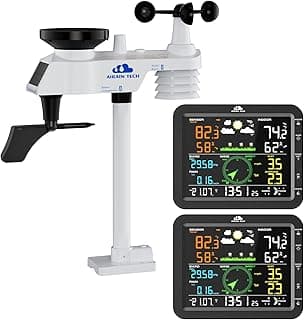
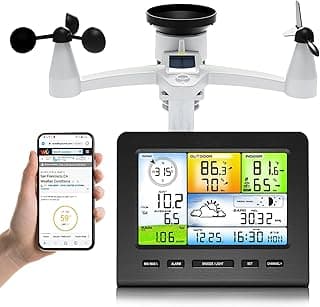
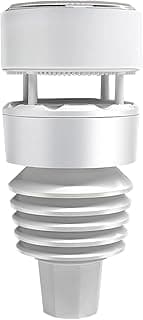
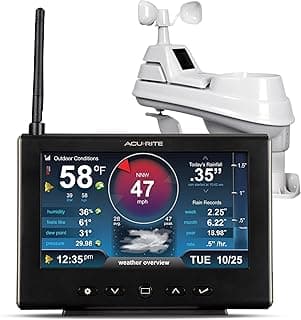
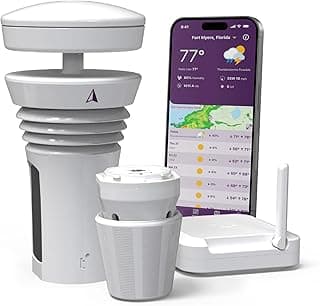
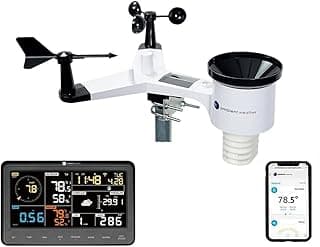
Buying Guide: Choosing the Best Rain Gauge with Wireless Display
Many homeowners set up a rain gauge with wireless display to track rainfall accurately without constant outdoor checks, but they often wonder if the signal will hold up in their yard or if installation will be a hassle. This guide breaks down the key factors to consider, helping you pick one that fits your setup and needs without guesswork.
Wireless Range and Signal Reliability
The distance between the outdoor sensor and indoor display matters most for consistent readings. In most cases, a range of 200–300 feet works well for typical homes, but walls, trees, or metal structures can interfere.
- If your house has thick walls or the sensor is far from the display, opt for models with stronger signals or repeaters.
- Avoid units claiming unlimited range; test in your environment if possible.
- For larger properties, choose ones supporting multiple sensors to cover more ground.
Accuracy and Measurement Type
Precise rainfall data helps with gardening, watering schedules, or flood monitoring. Tipping bucket designs generally offer better accuracy for real-world use, measuring in increments as small as 0.01 inches.
- If you need detailed logs, look for gauges that record daily, weekly, or monthly totals.
- Float-style gauges suit light rain tracking but may stick in heavy downpours.
- Calibrate periodically to maintain reliability, especially after storms.
Display Features and Readability
A clear indoor display makes data easy to glance at from across the room. Backlit screens with large digits are practical for low-light conditions or quick checks.
- If you check readings at night, prioritize LCD displays with auto-backlighting.
- Models showing trends like rainfall rates or forecasts add context without complexity.
- Choose customizable units if you want temperature or humidity alongside rain data.
Power Source and Battery Life
Reliable power keeps the system running through outages or forgotten changes. Solar-powered sensors with battery backups often last 1–2 years per set.
- If your area has frequent blackouts, select hybrid solar-battery options.
- Avoid relying solely on batteries for the outdoor unit to cut maintenance trips.
- Indoor displays on AC power with battery backup ensure uninterrupted viewing.
Durability and Weather Resistance
The outdoor sensor faces constant exposure, so IPX-rated waterproofing (like IPX5 or higher) prevents failures from rain or frost.
- For windy or coastal areas, pick UV-resistant plastics or metal components.
- Self-emptying designs reduce overflow issues during heavy rains.
- Mount securely 4–6 feet off the ground in an open spot away from eaves.
Installation and Setup Ease
Most units install in under 30 minutes with basic tools, easing concerns about complexity. No wiring means flexibility in placement.
- If you're not handy, choose models with included stakes and simple pairing buttons.
- Position the sensor on level ground for accurate collection.
- Test the wireless link right after setup to avoid later frustrations.
Additional Data and App Connectivity
Some wireless rain gauges link to apps for remote viewing and historical charts, useful if you travel or want detailed analysis.
- If basic readings suffice, stick to standalone displays to save cost.
- For tech-savvy users, app integration allows alerts for heavy rain.
- Ensure compatibility with your phone's OS before buying.
Frequently Asked Questions About Rain Gauges with Wireless Displays
What is the best rain gauge with wireless display for home use?
The top rain gauges with wireless displays stand out for their reliable signal range up to 300 feet and accurate measurements down to 0.01 inches, making them ideal for monitoring garden or yard rainfall remotely. If you're dealing with a larger property, prioritize models with strong transmission through walls and weatherproof sensors. Users often find these outperform basic wired options in convenience and data logging features.
How much does a good wireless rain gauge with display cost?
Expect to pay between $30 and $80 for a quality wireless rain gauge with display, depending on extras like temperature sensors or historical data storage. Basic models around $40 handle daily use well without unnecessary frills, while pricier ones offer app integration for under $70. In most cases, spending a bit more ensures better battery life and durability against heavy storms.
Are wireless rain gauges safe to use outdoors?
Yes, most wireless rain gauges with displays are designed with weatherproof, UV-resistant collectors and sealed electronics to withstand rain, wind, and temperatures from -20°F to 140°F. The wireless transmitter uses low-power radio signals that pose no safety risks, and batteries last 12-24 months without frequent changes. Just mount the sensor away from metal roofs to avoid interference.
How easy is installation for a rain gauge with wireless display?
Installation typically takes 10-15 minutes: mount the outdoor sensor on a pole or flat surface 3-5 feet off the ground in an open area, then sync it to the indoor display by pressing a button. No wiring is needed, and most include adjustable brackets for sloped roofs or fences. If your setup has thick walls, test the signal strength first to ensure clear reception.
How does a wireless rain gauge with display compare to traditional ones?
Wireless models excel over traditional funnel gauges by providing real-time indoor readouts and totals without constant outdoor checks, plus they often track trends over days or weeks. Traditional gauges are cheaper upfront but lack remote viewing and can overflow in heavy rain, while wireless ones self-empty and alert for extremes. For efficiency, choose wireless if you want hands-off monitoring without sacrificing precision.
Conclusion
Choosing the best rain gauge with wireless display comes down to accuracy, range, ease of setup, and reliable connectivity. Prioritize models with self-emptying tips for low maintenance and clear, backlit displays for anytime readability.
With these key factors in mind, you're equipped to make a confident decision that fits your needs, whether for gardening, farming, or weather tracking. Take a moment to match features to your setup and select the right one today for precise, hassle-free rainfall monitoring.