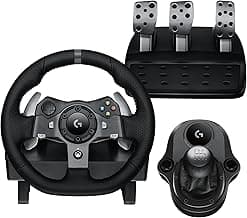
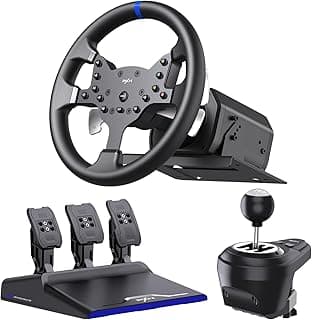
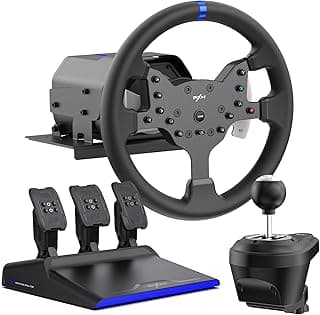
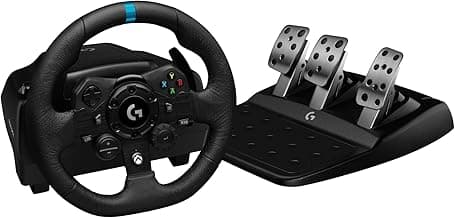
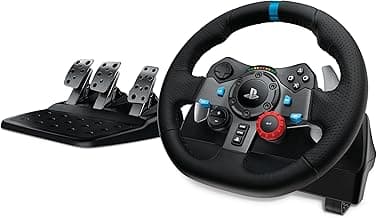
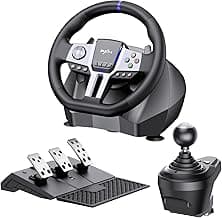
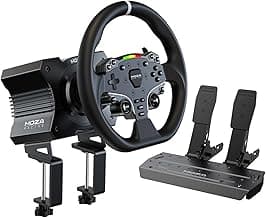
Buying Guide: Best Racing Wheels for PC
Choosing among the many racing wheels for PC can feel overwhelming, especially if you're unsure whether a more expensive option will actually improve your sim racing experience or if budget models will leave you frustrated after a few sessions. This guide breaks down the key factors to consider, helping you match a wheel to your setup and driving style without overpaying or settling for poor performance.
Wheelbase Power and Torque
The wheelbase delivers force feedback, simulating road feel, tire grip, and car dynamics. In real use, weak torque makes it hard to sense track conditions, turning immersive racing into a vague experience.
- If you race casually on shorter sessions, 5-8 Nm of torque often suffices for responsive feedback without overwhelming your desk setup.
- For serious sim racing with detailed car control, aim for 10 Nm or higher to feel subtle weight shifts and road textures accurately.
- Avoid bases under 5 Nm if you want feedback that matches mid-range PC sims, as they can feel mushy during high-speed corners.
Steering Wheel Diameter and Grip
Wheel diameter affects turning precision and comfort—too small feels arcade-like, while oversized ones clash with tight cockpits. Grip materials influence sweat-free long sessions.
- Opt for 280-320 mm diameters in most cases, as they balance quick rally flicks with GT precision for PC desks.
- If you prioritize endurance races, choose leather or microfiber grips for better hold during extended play.
- Smaller under 280 mm wheels suit rally or formula styles, but test if they fit your arm reach to avoid strain.
Pedal Set Quality and Features
Pedals handle braking and throttle input, where cheap plastic ones slip under pressure, leading to inconsistent lap times. Load cell brakes provide realistic modulation.
- For most users starting out, 2- or 3-pedal sets with adjustable resistance work well without complexity.
- If precise braking matters in your races, look for load cell pedals with at least 50-80 kg pressure for progressive feel like a real car.
- Avoid basic potentiometer pedals if you push hard, as they wear out faster and lack fine control.
Compatibility and PC Setup Ease
Not all wheels plug-and-play seamlessly with PC software, causing driver conflicts or calibration headaches that sideline your setup.
- Confirm native PC support via USB or included drivers before buying—most modern wheels connect directly.
- If you switch between PC and consoles, prioritize dual-platform compatibility to avoid separate purchases.
- Test ecosystem integration with popular sim titles during setup; mismatches often resolve with simple firmware updates.
Build Quality and Desk Mount Stability
A flimsy build vibrates excessively, distracting from feedback, while poor mounting turns your desk into a shaker during aggressive inputs.
- Metal constructions generally hold up better for daily use than all-plastic ones.
- If desk space is limited, choose clamp-mount bases with quick-release options for easy swaps.
- For cockpit owners, threaded plate compatibility ensures rock-solid stability without wobbles.
Price Range and Value Matching
Prices span from entry-level to pro-tier, but spending more doesn't always mean better if it exceeds your usage.
- Under $300 suits beginners testing sim racing without commitment.
- Mid-range $400-800 offers strong torque and durability for frequent players.
- If you're competing seriously, $1000+ provides premium details, but only if your PC rig justifies it.
- Factor in expandability—wheels with swappable parts extend value over time.
Additional Features for Immersion
Extras like shifters, handbrakes, or button layouts enhance realism without complicating basics.
- Sequential shifters add quick gear changes for circuit racing; H-patterns suit trucks or manuals.
- RevLEDs or display screens help monitor RPM without glancing away, useful in time trials.
- Include only if your games support them—otherwise, they add clutter to your setup.
Frequently Asked Questions About Racing Wheels for PC
What are the best racing wheels for PC in terms of value for money?
The top racing wheels for PC often strike a balance between features and price, with entry-level options around $200 delivering solid force feedback and pedal responsiveness for casual sim racing. If you're on a tighter budget, look for bundles under $150 that include a basic wheel base and pedals, though they may lack advanced customization. Higher-end picks over $500 excel for serious gamers but only justify the cost if you play frequently and want immersive realism.
Are racing wheels for PC safe to use at home?
Most quality racing wheels for PC come with secure clamp mounts that grip desks firmly, minimizing slippage during intense races, but always test stability on your setup first. Pedals typically feature non-slip bases, and wheels include quick-release mechanisms to avoid tangles. In most cases, they're safe for home use if you avoid loose surfaces and follow the included mounting guidelines to prevent accidents.
How easy is installation for racing wheels on PC?
Installing the best racing wheels for PC usually takes 10-20 minutes via USB plug-and-play, with drivers auto-detecting on Windows 10 or later. You'll need to calibrate in your racing game's settings and tweak force feedback levels for optimal feel, which most software guides you through intuitively. If you encounter issues, a quick restart or driver update resolves 90% of compatibility problems without technical expertise.
How do different PC racing wheels compare in performance?
Entry-level PC racing wheels prioritize affordability with decent 900-degree rotation and basic force feedback, ideal for beginners, while premium models offer direct drive tech for sharper precision and stronger rumble. Pedal sets vary too—plastic ones work fine for casual play, but metal-reinforced kits provide better durability and load cell braking for realistic control. Choose based on your games: sim-focused titles benefit from high-end torque, whereas arcade racers perform well on mid-range options.
What's the most efficient setup for racing wheels on PC?
For efficiency, pair a compact wheel with adjustable pedals that fold away easily, saving space without sacrificing performance in popular PC sims. Direct drive bases under 10Nm torque offer the best power-to-size ratio for apartments, delivering responsive feedback without excessive noise or heat. Focus on wheels compatible with major platforms to future-proof your setup and avoid constant recalibration.
Conclusion
Choosing the best racing wheels for PC comes down to your budget, preferred force feedback, and compatibility needs. Focus on models with strong build quality, responsive pedals, and smooth steering for an immersive experience. We've highlighted options that balance performance and value, helping you avoid common pitfalls.
With the right wheel, you'll elevate your sim racing to new heights. Take a moment to match features to your setup, and pick the one that fits best—your next lap awaits.