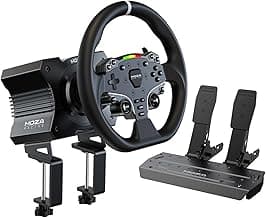
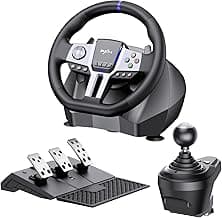
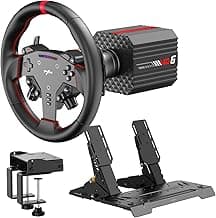
Buying Guide: Best PC Racing Wheels
Choosing among the many PC racing wheels can feel overwhelming, especially if you're unsure whether a basic setup will satisfy your sim racing sessions or if you'll need something more robust for long-term use. This guide breaks down the key factors to consider, helping you match options to your setup, budget, and driving style without common pitfalls like overspending on unused features.
Wheelbase Power and Torque
The wheelbase delivers force feedback, simulating road feel and car handling in games. In real use, stronger torque makes turns and bumps more immersive, but it can strain weaker desks or cause slippage on smooth floors.
- If you prioritize realism in high-speed sims, look for at least 5-8 Nm of torque for noticeable feedback without overwhelming entry-level rigs.
- For casual arcade racing, 2-5 Nm often suffices and keeps costs down.
- Avoid bases under 2 Nm if you want any meaningful resistance—they feel vague during aggressive maneuvers.
Steering Wheel Diameter and Grip
Wheel size affects control precision; larger diameters mimic real cars for better leverage, while smaller ones suit tight spaces or quick desk swaps. Grip materials impact sweat-free sessions during extended play.
- Opt for 280-320mm diameters if you have desk room—they offer authentic feel for GT or formula-style racing.
- Choose 250-280mm for apartments or console hybrids, where compactness matters more than full-scale immersion.
- Leather or microfiber grips hold up better than plastic in sweaty hands; test for comfort if possible.
Pedal Set Quality and Layout
Pedals handle braking and acceleration, where metal builds prevent flexing under hard stops—crucial for building muscle memory in competitive play. Load cell brakes add realism by measuring pressure, not just travel.
- If precision braking is key for track times, seek load cell pedals with 50-100kg resistance.
- For most beginners, sturdy plastic or basic metal pedals work fine without the extra cost.
- Ensure a stable base or plate; floor-mounted layouts reduce wobble compared to desk-clip designs.
PC Compatibility and Connectivity
Not all wheels plug-and-play seamlessly with PC—driver issues or game-specific tweaks can frustrate setup. USB direct drive or reliable wireless options minimize lag for smooth sessions.
- Verify native PC support via USB; if console-focused, check for PC mode to avoid adapters.
- For multi-platform use, prioritize wheels with switchable firmware.
- Steer clear of outdated Bluetooth if low latency matters—wired connections generally perform better in sims.
Build Quality and Desk Stability
Durable materials withstand daily torque without cracking, and secure mounting prevents crashes during intense races. Desk clamps beat suction cups for heavy bases.
- If your desk is sturdy, clamp-style mounts hold firm; add shunts for vibration-heavy use.
- Metal frames last longer than plastic in frequent play—inspect welds and adjusters for smoothness.
- For glass desks, choose lighter kits or cockpit-ready designs to avoid damage.
Price Range and Value Balance
Costs range widely, so align spending with your play frequency. Entry deals under $200 kickstart fun, while $500+ investments pay off for serious enthusiasts.
- If racing 1-2 hours weekly, mid-range ($200-400) offers solid feedback without excess.
- For daily simming, higher-end torque justifies the price through longevity and immersion.
- Watch for bundles including extras like shifters—they boost value if your games support them.
Additional Features for Immersion
Extras like shifters, handbrakes, or button layouts enhance specific games, but skip if they go unused to save money.
- Add a sequential shifter if rally or GT titles are your focus—H-patterns suit automatics less.
- Rev LEDs or display screens help monitor RPM without screen glances, useful in cockpits.
- Adjustable pedal angles accommodate seated positions; ignore if you rarely tweak setups.
Frequently Asked Questions About PC Racing Wheels
What are the best PC racing wheels for beginners on a budget?
If you're new to sim racing and watching your wallet, look for entry-level PC racing wheels under $200 that offer solid force feedback without unnecessary extras. These typically connect via USB for easy PC compatibility and provide enough realism for casual track sessions. In most cases, they handle popular racing games smoothly, helping you build skills before upgrading.
How do I install a racing wheel on my PC safely?
Installation is straightforward: plug the wheel and pedals into USB ports, download any required drivers from the manufacturer's site, and calibrate in your game's settings. Always secure the wheel to a sturdy desk or mount to prevent slippage during intense races, reducing risk of injury or damage. Test in a low-stakes session first to ensure responsive steering and pedal feel.
Are expensive PC racing wheels worth the extra cost?
Premium wheels often justify their $400+ price with stronger force feedback, metal construction, and smoother rotation for immersive realism that budget options can't match. If you race competitively or for hours daily, the durability and precision pay off by minimizing fatigue and improving lap times. For casual play, mid-range models around $250 deliver 80% of the experience at half the cost.
How do PC racing wheels compare to gamepads for efficiency?
Racing wheels outperform gamepads in precision and immersion, letting you feel every tire grip and road texture for faster, more consistent laps. They shine in sim-style games where analog control matters, though setup takes a bit more space and time. Gamepads remain efficient for quick sessions, but wheels build muscle memory that translates to better performance over time.
What safety features should I look for in a PC racing wheel?
Opt for wheels with adjustable force feedback to avoid wrist strain during long sessions, plus non-slip pedal bases for stable footing. Secure mounting clamps or plates prevent the setup from shifting unexpectedly, which is crucial if you're racing barefoot or in a carpeted room. Regularly check cables for wear to minimize tripping hazards around your rig.
Conclusion
Choosing the best PC racing wheels comes down to factors like force feedback quality, build durability, and compatibility with your setup. We've covered the essentials to help you prioritize what truly enhances your racing experience, from precise steering to immersive pedal response.
With this guide, you're equipped to make a confident decision that matches your budget and playstyle. Take a moment to assess your needs and select the model that elevates your laps—your next victory awaits.