
Buying Guide: Finding the Right Music Controller for Your Setup
When shopping for music controllers, it's easy to feel overwhelmed by the variety of pads, knobs, faders, and connectivity options. Many buyers worry about picking something that won't match their workflow or studio space, but focusing on a few key factors can simplify the process and help you find a controller that fits your needs without unnecessary extras.
Number of Pads and Keys
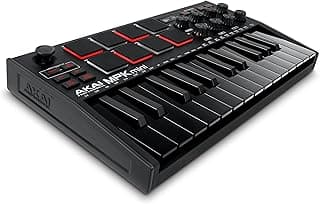
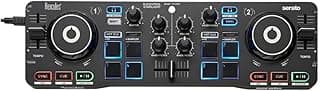
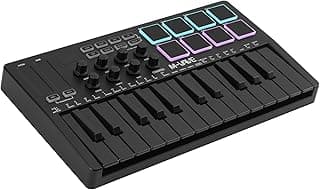
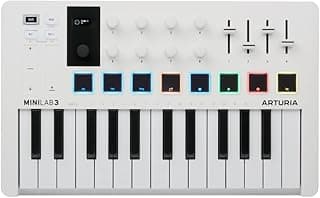
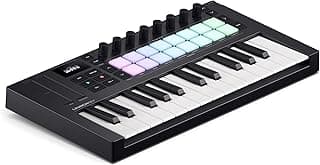
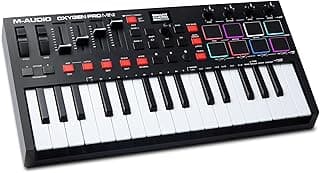
The number of pads or keys determines how much hands-on control you have for triggering beats, playing melodies, or mapping functions. In real use, too few pads can slow down your creative flow during live sessions, while too many might clutter a compact desk.
- If you're a beginner or focused on beatmaking, look for at least 16 pads for solid drum programming.
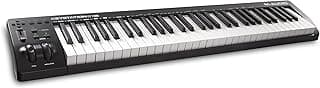
- For melodic work or complex arrangements, opt for controllers with 25–49 keys to cover most scales without needing an external keyboard.
- Avoid oversized keybeds if portability matters—smaller setups generally suit mobile producers better.
Faders, Knobs, and Controls
These hands-on elements let you tweak effects, volumes, and parameters in real time, which is crucial for mixing and performing. Without enough, you'll rely more on your mouse, breaking your creative rhythm.
- For most DAW users, 8 faders handle track mixing effectively in typical sessions.
- Choose models with assignable knobs if you switch between software often—rotary encoders offer precise control over automation.
- If you do live sets, prioritize layouts that mimic your software's interface to minimize learning curves.
Connectivity Options
Reliable connections ensure seamless integration with your computer, phone, or other gear. USB-only might limit you in hybrid setups, while versatile ports future-proof your investment.
- USB-C is generally the most practical for modern laptops, with plug-and-play support in most cases.
- If you use iOS devices or older MIDI gear, check for Lightning compatibility or 5-pin MIDI I/O.
- Bluetooth can add wireless freedom, but wired connections are more stable for low-latency performance.
Size, Weight, and Portability
Your controller's physical footprint affects daily use, whether it's staying on your desk or traveling to gigs. Bulky units save space at home but hinder mobility.
- For home studios, medium-sized controllers (around 12–18 inches wide) balance control and desk real estate.
- Traveling producers should aim for under 4 pounds with a padded case option.
- Test the build for stability—rubberized bases prevent slipping during intense sessions.
Software Compatibility and Mapping
Easy integration with your digital audio workstation (DAW) means less setup time and more music-making. Poor mapping leads to frustration when controls don't respond intuitively.
- Look for native support in popular DAWs to enable automatic layouts.
- Customizable MIDI mapping is helpful if you use niche software—ensure deep editor apps are available.
- For most users, controllers with pre-mapped templates speed up initial setup significantly.
Build Quality and Display Features
Durable construction withstands frequent use, and a clear display provides feedback without glancing at your screen. Cheap plastics wear out quickly under pressure.
- Metal chassis or reinforced pads hold up better for gigging.
- Backlit pads with velocity sensitivity improve visibility and expression in dim environments.
- If budget allows, RGB lighting helps with visual mapping during complex projects.
Price and Value for Your Workflow
Controllers range widely in cost, so align spending with your skill level and goals. Overpaying for unused features wastes money, while skimping can mean replacing it soon.
- Beginners often find good value under $150 for core functions.
- Intermediate users benefit from $200–400 models with expanded controls.
- Evaluate based on your primary tasks—if portability trumps pads, prioritize accordingly.
Frequently Asked Questions About Music Controllers
What are the best music controllers for beginners on a budget?
If you're just starting out, look for music controllers under $100 that include essential pads, knobs, and keys for basic production. These affordable options connect easily via USB and work with most DAWs, helping you practice beats and melodies without a steep learning curve. In most cases, they offer great value if you prioritize portability over advanced features like aftertouch.
How much do high-quality music controllers typically cost?
Entry-level music controllers start around $50-$150, while mid-range models with more pads and faders run $200-$400, and premium ones exceed $500 for pro-level integration. Your cost depends on needs like key count or drum pad sensitivity—budget picks handle everyday use efficiently without breaking the bank. Consider sales or bundles to maximize value on reliable performers.
Are music controllers safe to use with standard home setups?
Yes, most music controllers are USB-powered and low-voltage, making them safe for desktops, laptops, or even mobile devices with no risk of electrical issues. They generate minimal heat during extended sessions and have durable builds to withstand daily handling. Always use official cables to avoid connectivity glitches, ensuring smooth, worry-free operation.
How easy is installation for music controllers?
Installation is straightforward—plug into USB, download any free driver if prompted, and map controls in your software within minutes. No complex wiring or tools needed; they auto-recognize on Windows, Mac, and even tablets in most cases. If issues arise, a quick restart or software update resolves 90% of setup hiccups for seamless integration.
How do the best music controllers compare in terms of efficiency and features?
Top music controllers stand out for responsive pads and customizable mapping that speed up workflows compared to basic MIDI keyboards. Pad-based models excel in beat-making efficiency, while key-focused ones suit melody creation—choose based on your genre for optimal performance. They all prioritize low latency for real-time control, making production feel intuitive regardless of comparisons.
Conclusion
When selecting the best music controllers, focus on build quality, responsiveness, compatibility, and features that align with your workflow. We've highlighted options that balance performance and value, helping you navigate the choices confidently.
Rest assured, the right controller will elevate your music production without overwhelming complexity. Consider your specific needs—whether portability, key count, or pad sensitivity—and pick the model that fits best. Start creating with enhanced control today.