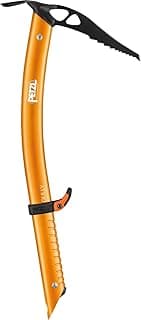
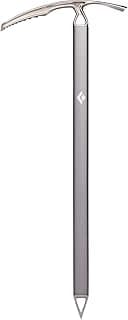
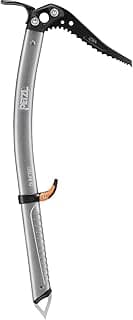
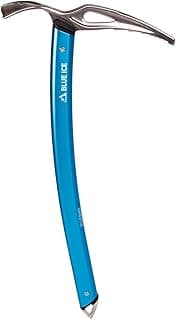
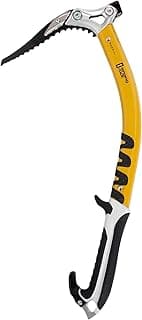
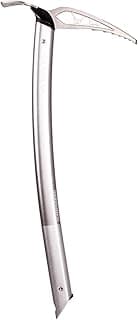
Buying Guide: Finding the Best Ice Axe for Men
Choosing an ice axe can feel overwhelming if you're new to mountaineering or ice climbing, especially when sizing it up for men's typical builds and activities. Many buyers worry about picking something too heavy or mismatched for their terrain, but focusing on a few key factors makes it straightforward to find a reliable tool without overcomplicating the decision.
Shaft Length
Shaft length affects balance, swing control, and self-arrest capability in real-world scenarios like steep snow slopes or glacier travel. For most men around 5'8" to 6'2" tall, a length between 50-70 cm works well for general mountaineering.
- If you're under 5'10" or prioritize self-arrest on moderate terrain, then opt for 60-65 cm.
- For taller users or technical ice climbing, go longer at 65-75 cm to improve leverage.
- Avoid extremes: too short limits reach, while overly long adds fatigue on long approaches.
Pick and Adze Design
The pick penetrates ice effectively, while the adze chops steps or clears rime—both critical for secure placements during ascents. Curved picks suit aggressive ice climbing, while straight ones excel in snow and mixed routes.
- If your focus is vertical ice, then choose a curved, tapered pick for better hooking.
- For alpine touring or snow fields, a modular or straight pick offers versatility.
- Ensure the adze is robust for digging; thin designs can bend under heavy use.
Shaft Material and Weight
Material determines durability and swing weight, impacting fatigue on multi-day trips. Aluminum shafts are lighter and cheaper but dent easier, whereas steel or carbon fiber hold up to abuse.
- In most cases for general use, aim for 400-600 grams total weight to balance power without exhaustion.
- If you're carrying it all day on skis, then prioritize sub-500 gram options with aluminum.
- For high-consequence routes, select steel-reinforced shafts that resist bending.
Ergonomics and Grip
A comfortable grip prevents hand fatigue and slippage in cold, wet conditions, which is vital for prolonged swings or belays. Look for textured rubber or cork that molds to gloved hands.
- If you climb in variable weather, then choose modular grips with wrist loops for security.
- For technical routes, ergonomic spines allow multiple hand positions.
- Avoid smooth metal-only grips—they slip when icy, risking drops.
Certifications and Build Quality
UIAA or CE certifications confirm the axe meets drop-test and hold-strength standards, giving peace of mind on committing terrain without guessing durability.
- Always verify certification labels to ensure reliability under load.
- Check for even welding and tight head assembly to avoid loosening over time.
- For occasional use, standard certification suffices; high-end models add overbuilt features for extreme abuse.
Intended Use and Versatility
Match the axe to your activities—general mountaineering differs from pure ice walls—to avoid buying multiples. Many modern designs swap components for adaptability.
- If you're hiking glaciers or moderate snow, then a classic mountaineering axe covers it.
- For steep ice or mixed climbing, seek technical models with hammer-compatible heads.
- Test swing weight in-store if possible; it reveals real usability better than specs.
FAQ: Best Ice Axe for Men
What should men consider when choosing the best ice axe for mountaineering?
Men heading into steep snow or ice should prioritize an ice axe with a balanced length between 50-70 cm, depending on their height and typical terrain, to ensure effective self-arrest and swinging. Look for a durable steel head with a sharp pick for secure ice penetration and a sturdy shaft that fits your grip comfortably during long approaches. In most cases, modular designs allow customization for safety without unnecessary weight.
How much does a good ice axe for men typically cost?
A reliable ice axe for men usually ranges from $100 to $250, with entry-level options around $100 offering solid performance for casual use, while premium models near $250 provide better materials for frequent technical climbs. Factors like shaft material—aluminum for lighter weight or steel for toughness—drive the price up, but avoid skimping on quality to prevent failure in critical moments. Most users find mid-range picks deliver the best value for safety and durability.
Is the best ice axe for men safe for beginners?
Yes, many top ice axes for men are designed with beginner-friendly features like ergonomic handles and self-arrest curves that make practicing stops intuitive and reliable. Safety hinges on proper fit—choose one where the spike reaches your ankle when held at your side—and always pair it with gloves to maintain grip in cold conditions. If you're new to ice climbing, opt for a model certified for general mountaineering to build confidence without risks.
How do you properly install or attach an ice axe for use?
Securing your ice axe involves a simple leash system: thread the adjustable wrist loop through the hole near the head, tighten it to prevent slippage, and carry it head-up on your pack with the pick covered until needed. For walking, sling it diagonally across your back with the head over your shoulder for quick access. Practice deployment in safe terrain first to ensure smooth transitions from carry to swing.
What makes one ice axe for men more efficient than another?
Efficiency comes down to weight and balance—a lighter axe around 400-600 grams swings faster with less fatigue on multi-pitch routes, while a well-balanced design reduces strain during repeated placements. Curved picks excel in ice for smoother penetration compared to straight ones better suited for snow, so match it to your primary terrain. Users often report that the right length enhances swing power without compromising control in variable conditions.
Conclusion
Choosing the best ice axe for men comes down to balancing length, weight, shaft material, and pick curvature with your specific mountaineering or ice climbing needs. Prioritize ergonomic grips for comfort during extended use and durable construction for reliability in harsh conditions.
With these key factors in mind, you're well-equipped to make a confident decision. Assess your terrain and experience level, then select the model that aligns best with your adventures. Gear up thoughtfully and stay safe on the ice.