Buying Guide: Choosing the Best Home Weather Station
Many people shopping for a home weather station feel overwhelmed by the options and wonder if they'll get accurate readings without needing technical expertise. In reality, most modern units are straightforward to set up and provide reliable data for everyday use like garden planning or storm tracking.
Sensors and Measurement Types
Sensors determine what weather data you can track, such as temperature, humidity, wind speed, rainfall, and barometric pressure. If you live in a windy area or want to monitor rain totals, prioritize models with anemometers and rain gauges.
- Basic setups often cover temperature and humidity indoors and out.
- For comprehensive monitoring, look for 5-in-1 or multi-sensor arrays.
- Avoid skimping on sensors if outdoor conditions vary widely in your region.
Accuracy and Calibration
Accuracy matters for trusting forecasts or spotting microclimate trends in your yard. Most units offer readings within ±2°F for temperature and ±3% for humidity, which suffices for home use.
If precision is key for hobbies like viticulture, choose stations with user-calibratable sensors. Test placements away from walls or direct sun to minimize errors without frequent adjustments.
Wireless Range and Connectivity
Wireless range affects how far sensors can be from the display unit—typically 300–1,000 feet in open areas. Walls and interference reduce this, so check real-world performance.
- For large properties, opt for 1,000-foot range or Wi-Fi models.
- If you want app access or cloud data, select Wi-Fi-enabled units for remote viewing.
- Bluetooth-only works if your setup stays close indoors.
Display and Data Features
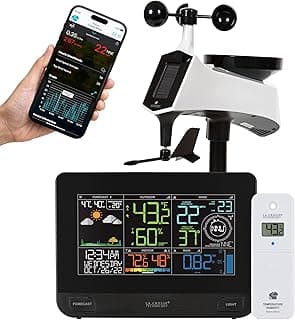
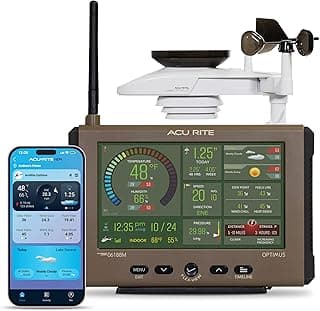
A clear display with backlighting helps quick checks day or night. Look for units showing trends, forecasts, and history graphs to spot patterns like rising humidity before rain.
If you prefer phone integration, choose models with apps for detailed charts. For simple needs, a console with min/max records often covers daily use without extras.
Power Source and Battery Life
Power options include solar, AA batteries, or AC adapters. Solar-powered sensors last years in sunny spots, reducing maintenance.
- In cloudy climates, pick hybrid models to avoid dead batteries during storms.
- Expect 1–2 years from quality lithium batteries in sensors.
- Indoor consoles usually plug in, minimizing outages.
Installation and Setup Ease
Most home weather stations assemble in under 30 minutes with basic tools—no wiring or professional help needed. Mount sensors on poles or roofs for best exposure.
If you're not handy, favor pole-mount kits over complex towers. Start with indoor testing to confirm signal before outdoor install, easing common setup frustrations.
Durability and Weather Resistance
Outdoor sensors face rain, wind, and temperature swings, so IPX-rated housings (like IPX5 or higher) protect against elements.
For coastal or extreme areas, reinforced plastics hold up better than basic models. Generally, units rated for -20°F to 140°F handle most climates without issues.
Cost and Value Balance
Prices range from $50 for basics to $500+ for advanced setups. Factor in long-term value like app features or expandability.
If budget is tight, start basic and add sensors later. For frequent use, investing in reliable connectivity pays off over cheap units that need replacing.
Frequently Asked Questions About Home Weather Stations
What is the best home weather station for the money?
If you're watching your budget, look for models around $100-$300 that offer core features like temperature, humidity, wind speed, and rain tracking without unnecessary extras. In most cases, these provide reliable data for everyday use, and you'll get good value if the app integration is smooth for remote monitoring. Higher prices often mean added sensors or better build quality, but start with your specific needs to avoid overspending.
Are home weather stations safe to use outdoors?
Most units are designed with weatherproof enclosures rated IPX4 or higher, protecting against rain and wind, but always check the sensor housing for secure mounting. Safety improves if you install lightning protection or place the station away from power lines during storms. Users report peace of mind when following the included guidelines, keeping wiring away from water sources.
How easy is installation for a typical home weather station?
Setup usually takes 30-60 minutes with basic tools like a drill and ladder; mount the main unit on a pole 5-10 feet high in an open area, then connect wirelessly to your indoor display or router. If you're not handy, opt for plug-and-play models with step-by-step apps that guide calibration. Common pitfalls like poor signal strength are fixed by keeping the base station within 300 feet line-of-sight.
How accurate are personal home weather stations compared to professional ones?
Home models can match pro-grade accuracy within 5-10% for basics like temperature and humidity when properly sited away from buildings or trees, though wind and rain sensors might vary more in gusty conditions. Calibrating against local reports helps, and many include self-adjusting features for reliability. For casual users, this level of precision is plenty without the high costs of official equipment.
What features make a home weather station efficient for daily use?
Efficiency shines in models with solar-powered sensors to cut battery swaps and low-power Wi-Fi for seamless data syncing to your phone. Look for customizable alerts for frost or high winds, plus historical charts to spot trends over time. Real users appreciate quick setup and minimal maintenance, making them practical for tracking garden conditions or home energy planning.
Conclusion
Choosing the best home weather station comes down to accuracy, ease of use, and features that match your needs, like reliable sensors and intuitive apps. The top options excel in delivering precise data for daily planning or hobbyist tracking.
With clear comparisons, you're equipped to make a confident decision without second-guessing. Consider your priorities—indoor comfort, outdoor durability, or advanced forecasting—and select the model that fits best. Start monitoring your local weather today with peace of mind.