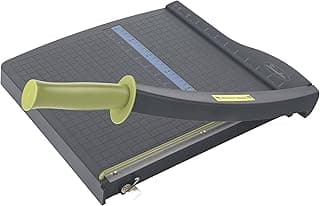
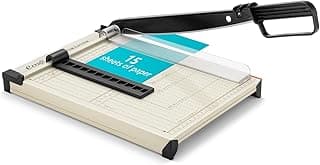
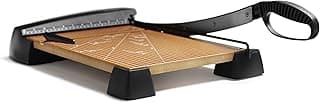
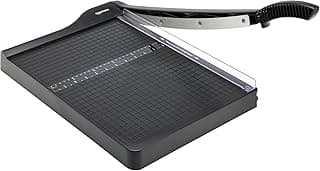
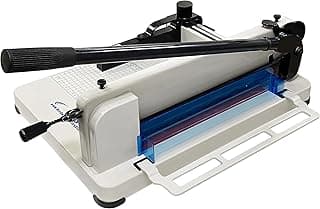
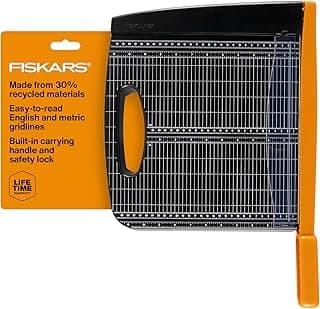
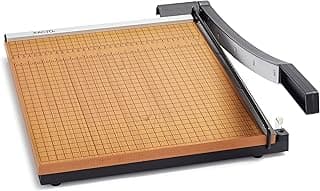
Buying Guide: Finding the Right Guillotine Paper Trimmer
Choosing among guillotine paper trimmers can feel overwhelming when you're dealing with stacks of documents or craft projects, especially if you're unsure about safety or how much cutting power you really need. This guide breaks down the key factors to consider, helping you match a trimmer to your actual workflow without overpaying or compromising on reliability.
Cutting Capacity and Paper Size
The cutting length and thickness a trimmer handles directly affects its usefulness for your projects. If you mostly trim letter-size sheets or photos, a 12-15 inch cut length works well for most home or office tasks. For larger posters or frequent bulk jobs, look for 18 inches or more.
- Check the maximum stack height—typically 20-50 sheets for everyday use—to avoid multiple passes.
- Avoid models under 10 inches if you handle anything beyond standard paper, as they limit versatility.
If your work involves A3 or tabloid sizes, prioritize trimmers rated for those dimensions to prevent imprecise cuts.
Blade Quality and Sharpening
A sharp, durable blade ensures clean edges without tearing, which matters most during repeated use. Solingen steel or similar high-carbon blades stay sharp longer, reducing replacement frequency.
- Opt for trimmers with user-replaceable or pre-sharpened blades if you cut 500+ sheets weekly.
- If you're in a light-use scenario like occasional crafting, a basic blade suffices, but test for smoothness on coated paper.
Steer clear of overly cheap blades that dull quickly, as they lead to jagged results and safety risks from forcing cuts.
Safety Features
Safety concerns often deter buyers, but modern guillotine trimmers include features that make them practical for home or school settings. A transparent clamp and blade guard prevent slips, while auto-locking mechanisms secure the blade when idle.
- Choose models with finger guards and non-slip pads if kids or beginners will use it.
- For professional environments, prioritize spring-loaded blades that retract fully after each cut.
These elements reduce accidents without complicating operation—in most cases, they add minimal cost but significant peace of mind.
Build Quality and Stability
A sturdy base prevents wobbling during cuts, ensuring accuracy over time. Metal frames with rubber feet offer better stability than all-plastic ones, especially for heavier stacks.
- If portability matters, select lightweight aluminum builds under 10 pounds that still resist tipping.
- For desk-bound use, heavier models over 15 pounds with wide bases handle vibration better.
Test for smooth rail movement; sticky guides signal poor construction and frustrate long sessions.
Size, Portability, and Storage
Consider your space—compact trimmers fit small desks, while larger ones suit dedicated craft rooms. Fold-down designs save storage in tight areas.
- For mobile use like events or classrooms, pick units under 20 x 10 inches with handles.
- If stationary, a bigger footprint provides leverage for thick stacks.
Measure your workspace first to avoid returns; many fold flat without losing functionality.
Price and Long-Term Value
Trimmers range from $20 for basics to over $100 for heavy-duty options. Balance initial cost with durability—cheaper models wear out faster in regular use.
- For occasional trimming, spend under $50 on entry-level units.
- If cutting daily, invest $70+ for replaceable parts and warranty coverage.
Factor in blade replacements, typically $10-20 yearly, to gauge true ownership costs.
Best Guillotine Paper Trimmers FAQ
What should I consider when choosing the best guillotine paper trimmer for home or office use?
Look for a model with a cutting length of at least 12 inches for everyday tasks like trimming photos or documents, and check the maximum paper thickness it handles to match your needs. Safety features like blade locks and transparent guards are essential to prevent accidents, especially if multiple people will use it. Balance your budget with durability—mid-range options around $50-$150 often provide the best value for frequent use without sacrificing precision.
Are guillotine paper trimmers safe for regular household use?
In most cases, yes, if the trimmer has a sturdy lock mechanism and a clear safety guard that keeps fingers away from the blade path. Always clamp your paper securely before cutting to avoid slips, and teach kids to never touch the blade area. Higher-quality trimmers with spring-loaded handles reduce strain and minimize the risk of the blade snapping down unexpectedly.
How much do the best guillotine paper trimmers typically cost?
Entry-level trimmers start around $20-$40 for light home use, while professional-grade options for offices run $100-$300 depending on cutting capacity and build quality. If you're trimming stacks of paper weekly, spending $60-$120 gets you sharper blades and better alignment that lasts years. Avoid the cheapest models if precision matters, as they often dull quickly and lead to crooked cuts.
Do guillotine paper trimmers require any special installation or setup?
No complex installation is needed—they're ready to use right out of the box after unfolding the base for stability. Place it on a flat, non-slip surface like a desk or counter, and test a few cuts to ensure the blade aligns properly. For heavier models, secure it with non-slip pads underneath to prevent shifting during use.
How do guillotine paper trimmers compare to rotary or electric cutters for efficiency?
Guillotine trimmers excel at straight, high-volume cuts on standard paper stacks, making them more efficient for bulk tasks than rotary models, which are better for curves or photos but slower for stacks. They're generally faster and cheaper than electric versions for occasional use, though electrics save time on very thick materials. Choose based on volume: guillotines shine for quick, precise office trimming without needing power outlets.
Conclusion
Choosing the best guillotine paper trimmers comes down to blade sharpness, cutting capacity, safety features, and build quality that suits your needs. The top options balance precision with durability, ensuring clean cuts for everything from crafts to professional projects.
You can feel confident in your decision by matching these key factors to your workflow. Take a moment to select the model that fits best—your next perfect trim awaits.