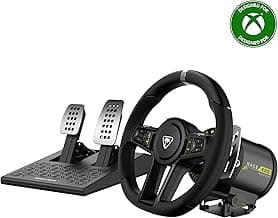
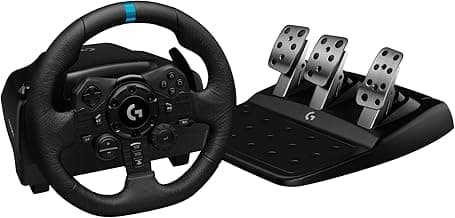
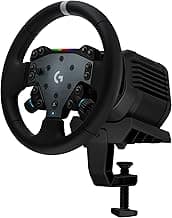
Buying Guide: Best Force Feedback Racing Wheels
Choosing among force feedback racing wheels can feel overwhelming with all the options promising immersive sim racing. Many buyers worry about matching the wheel to their setup without overspending or dealing with compatibility headaches. This guide breaks down the key factors to focus on for a practical purchase.
Force Feedback Strength and Quality
Force feedback is the core of realistic racing simulation, mimicking road feel, bumps, and car handling. In real use, stronger feedback helps you sense tire grip and track changes, improving lap times during extended sessions.
If you race competitively or want detailed road texture, look for wheels with at least 5-7 Nm of peak torque. For casual play on a desk setup, 4-5 Nm often suffices without overwhelming your space. Avoid very low-end models under 3 Nm, as they feel vague and less engaging over time.
Wheelbase Torque and Direct Drive vs. Gear-Driven
The wheelbase delivers the feedback power. Direct drive bases offer precise, quiet torque without belts or gears, ideal for serious sim racers seeking pro-level detail. Gear-driven bases are more affordable and sufficient for most home users.
- If budget allows and you prioritize silence and nuance, consider direct drive with 8 Nm or higher.
- For beginners or occasional use, gear-driven with smooth multi-stage gearing works well and costs less.
Test for minimal cogging in gear systems to ensure smooth feedback during straight-line driving.
Compatibility with Platforms and Games
Not all wheels work seamlessly across PC, PlayStation, or Xbox. Mismatches lead to setup frustration or lost features like true force feedback.
Check for native support in your primary platform. If you switch between PC and console, opt for wheels with broad certification. For PC-only sims like iRacing, prioritize models with extensive game profiles to avoid tweaking settings mid-race.
Wheel Rim Size, Shape, and Materials
Rim size affects control and comfort. A 280-320mm diameter suits most adult hands for precise inputs without fatigue.
Choose based on your driving style: GT-style rims for road cars, rounder formulas for open-wheel. Leather or alcantara grips enhance sweat-free long sessions, while budget plastic works for short plays. If you have smaller hands, test for rim width under 32cm circumference.
Pedal Set Quality and Adjustability
Pedals often get overlooked but impact braking precision. Load-cell pedals provide progressive brake feel, mimicking real cars better than potentiometer types.
- For realistic modulation, select load-cell with 50-100kg pressure if your budget fits.
- Basic three-pedal sets suffice for most, but ensure adjustable spacing to match your seating.
Avoid flimsy metal frames that shift during hard braking.
Build Durability and Desk vs. Rig Mounting
Racing wheels endure twisting forces, so sturdy construction prevents wobble. Desk clamps work for casual setups, while rigs offer stability for hardcore use.
If space-limited, pick wheels with strong quick-release clamps rated for high torque. For dedicated cockpits, ensure bolt patterns match common rig tubes. Look for metal internals over plastic for longevity in daily practice.
Price, Warranty, and Long-Term Value
Expect to spend $300-800 for capable force feedback systems. Higher upfront cost often means better resale and fewer upgrades later.
If you're starting out, mid-range options balance features without excess. Check for 2+ year warranties covering motors. Factor in ecosystem expandability, like swappable rims, for future-proofing your setup.
Best Force Feedback Racing Wheels FAQ
What are the best force feedback racing wheels for beginners on a budget?
If you're new to sim racing and watching your spending, look for entry-level force feedback racing wheels under $300 that still deliver solid road feel without overwhelming power. These models often provide enough resistance to mimic real driving dynamics, helping you learn cornering and braking intuitively. In most cases, they pair well with popular consoles and include pedals, making them a practical starter kit that won't break the bank.
Are force feedback racing wheels safe to use at home?
Yes, most quality force feedback racing wheels are designed with safety in mind, featuring torque limits and slip-ring mechanisms to prevent cord twisting or sudden jerks that could strain your setup. If you mount them securely to a sturdy wheel stand or desk, you'll avoid wobbling during intense races. Always check the power rating matches your space—stronger feedback feels immersive but requires a stable rig to keep things safe.
How easy is installation for top force feedback racing wheels?
Installation is straightforward for the best force feedback racing wheels, typically taking 15-30 minutes with plug-and-play USB connections for PC or consoles. You'll clamp the wheel base to a desk or rig, attach the pedals via threaded connectors, and calibrate through simple software—no tools needed beyond a screwdriver in most cases. If switching between platforms, quick-release hubs on premium options make swapping even faster.
How do direct drive force feedback racing wheels compare to belt-driven ones?
Direct drive wheels offer superior precision and instant torque response compared to belt-driven models, making them ideal for serious racers seeking the most realistic feedback, though they cost significantly more. Belt-driven options are more affordable and quieter for casual use, with enough detail for everyday track sessions without the premium price tag. Choose based on your setup: direct drive shines in dedicated sim rigs, while belts suit budget home offices.
What's the real-world efficiency of force feedback in racing wheels?
Force feedback racing wheels boost your driving efficiency by simulating tire grip loss and road texture, helping you maintain optimal lines lap after lap without guesswork. In practice, users report faster lap times after a few sessions as the haptic cues train muscle memory for better control. Power draw is low—around 100-200W max—so they run cool and efficient even during long endurance races.
Conclusion
In choosing the best force feedback racing wheels, focus on compatibility, feedback strength, build quality, and your specific setup needs. These elements ensure an immersive, responsive driving experience that elevates every lap.
With the right balance of features, you can confidently upgrade your sim racing without guesswork. Take a moment to match your priorities to the top options discussed, and select the wheel that fits your rig perfectly for years of reliable performance.